
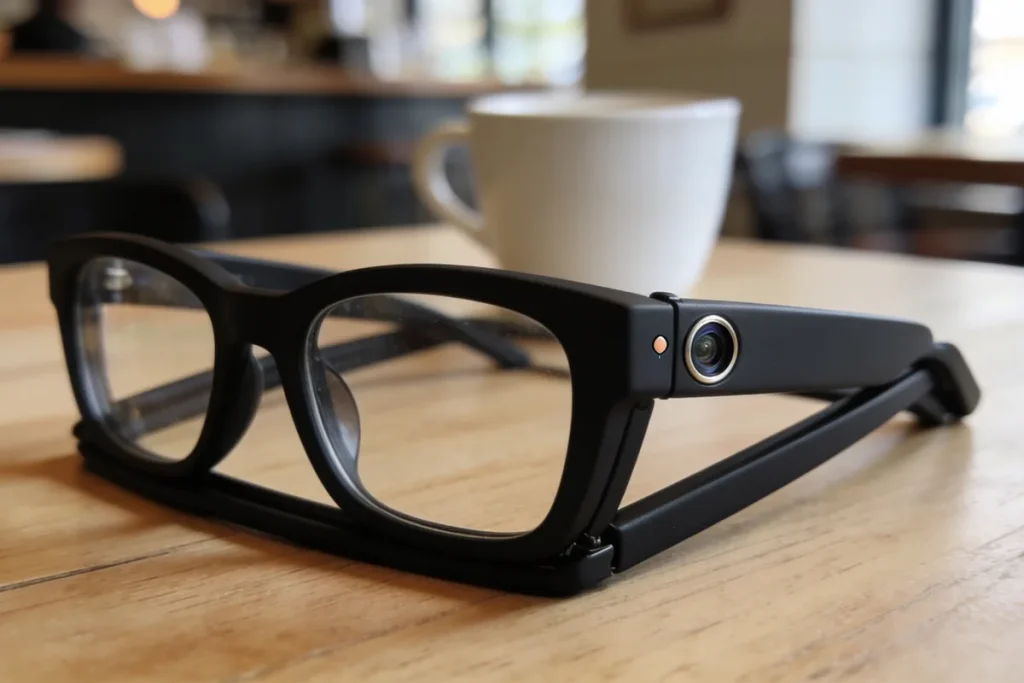
Kmart’s $89 Anko camera glasses no longer appear on the retailer’s website. On the same day, Wednesday 7 October, Privacy Commissioner Carly Kind opened a formal investigation into Shenzhen Qingcheng, the China-based company behind the HeyCyan app that the glasses use.
The investigation is into the app maker, not Kmart. The Office of the Australian Information Commissioner (OAIC) said no other company is under investigation, and the Guardian reported the same.
According to the OAIC, the investigation was opened because Shenzhen Qingcheng did not respond to the office’s preliminary inquiries, and because third-party analysis of the technology and of the company’s privacy policy had raised concerns. The Guardian reported both grounds. Those preliminary inquiries had gone to five companies in all, Kmart, BDI Technology, Shenzhen Qingcheng, Meta and Google, and only the app maker has moved to a formal investigation.
“In the absence of any response from Shenzhen Qingcheng to the OAIC’s preliminary inquiries, I have no assurance that it is protecting personal data of Australians as required by the Privacy Act,” Ms Kind said, according to The Sydney Morning Herald.
The wording is careful. The commissioner did not say the company had misused anyone’s data; she said that, with no answer to her questions, she could not be sure it was protecting that data. As the Herald noted, opening an investigation is not a finding that the company broke the law. How companies look after Australians’ personal data has come up in consumer news before this year, including Origin Energy’s confirmation that a hack hit 900,000 customer accounts in July.
The glasses went on sale on 28 July and sold out within a week, the Herald reported, and the Guardian reported the sell-out in August. They no longer appear on Kmart’s website, according to both the Guardian and the Herald. Kmart had not commented when either report was published, so the company has not given its own account of why the listing is no longer there.
The glasses had already drawn organised opposition. A GetUp petition against them has gathered more than 55,000 signatures, according to the OAIC and the Guardian. Paul Ferris, GetUp’s interim chief executive, linked the website change to that pressure. “It looks like Kmart has seen the writing on the wall and listened,” he told the Herald.
Local government has taken its own steps. Councils including Brisbane, the City of Sydney, Canterbury-Bankstown and Yarra have restricted the glasses at pools or leisure venues, the Guardian and the Herald reported. Those are rules for particular venues, set locally, and they sit apart from the national privacy law that the commissioner administers.
What the Law Can Reach
Ms Kind has been clear about where her office’s powers stop. The Privacy Act applies to companies and Commonwealth agencies, she said, and not to individuals, according to the OAIC and the Guardian. Even among companies, she wrote, the Act reaches only those that hold personal information: a retailer that sells smart glasses, or a company that makes them, may have no obligations under it if it collects none, and the company providing the software is likely to be the one that does.
The investigation now under way is directed at that software company, the maker of the app the glasses use, and not at anyone who has worn them. A council can set rules for its own pools, and a retailer can decide what it lists, but under the Act as Ms Kind described it, the person behind the lens sits outside the commissioner’s reach.
Ms Kind said proposed reforms to the law would strengthen protections, the OAIC and the Guardian reported. Until any such change, the formal question raised on 7 October sits with Shenzhen Qingcheng, and no finding has been made.
Sources: Office of the Australian Information Commissioner, “Smart glasses under the microscope”, 7 October 2026 (https://www.oaic.gov.au/news/blog/smart-glasses-under-the-microscope); Guardian Australia, “Privacy watchdog launches investigation into China-based company behind Kmart ‘pervert glasses’ app”, 7 October 2026 (https://www.theguardian.com/technology/2026/oct/07/privacy-regulator-probe-kmart-anko-meta-smartglasses-australia); The Sydney Morning Herald, “Kmart’s $89 camera glasses removed from sale online amid privacy backlash”, 7 October 2026 (https://www.smh.com.au/technology/kmart-s-89-camera-glasses-removed-from-sale-online-amid-privacy-backlash-20261007-p613cz.html)
Illustration: this image was generated by AI and is not a photograph of a real product.
Illustration: AI-generated for Daily Drip News.
Illustration only, generated by AI. It depicts no real product, retailer or brand and is not the Anko glasses.