Kenya has recorded the first Ebola case in its history, after a Kenyan man who had travelled from the Democratic Republic of Congo died in hospital in Nairobi on Monday. The Guardian, BBC News and UN News all reported the case.
The man had lived in DR Congo for seven years and had been ill there for about a month before he travelled, according to the Guardian. He went overland into Uganda and flew from there to Nairobi on Saturday 3 October, the Guardian and UN News reported. He was isolated in hospital after he arrived, and he died there on Monday, according to the BBC and UN News. He has not been publicly named.
Health officials are now tracing and quarantining the people he came into contact with. Health Minister Aden Duale asked the public to stay calm. “I wish to assure the public not to panic, as all systems are in place to mitigate the spread of the disease,” he said, according to the Guardian.
The strain involved is Bundibugyo, for which there is no approved vaccine and no specific treatment, the Guardian and the BBC reported.
The case is linked to the outbreak in DR Congo, which was declared in May and has killed more than 4,000 people, according to the Guardian and the BBC. Uganda, the country the man crossed on his way to Kenya, had been declared Ebola-free in August, both outlets reported.
Questions have also been raised about how the man came to pass through screening on his journey. Patrick Amoth, a Kenyan health ministry official, said the man might have passed screening after taking medication that masked his symptoms, the BBC reported. By the Guardian’s account, he had already been unwell for about a month when he set out, and his route took him across a land border into Uganda and then onto a flight to Nairobi.
Jean Kaseya, chief of the Africa CDC, put the issue directly when he spoke to the BBC. “What are symptoms he was presenting? Why was he not detected?” he said.
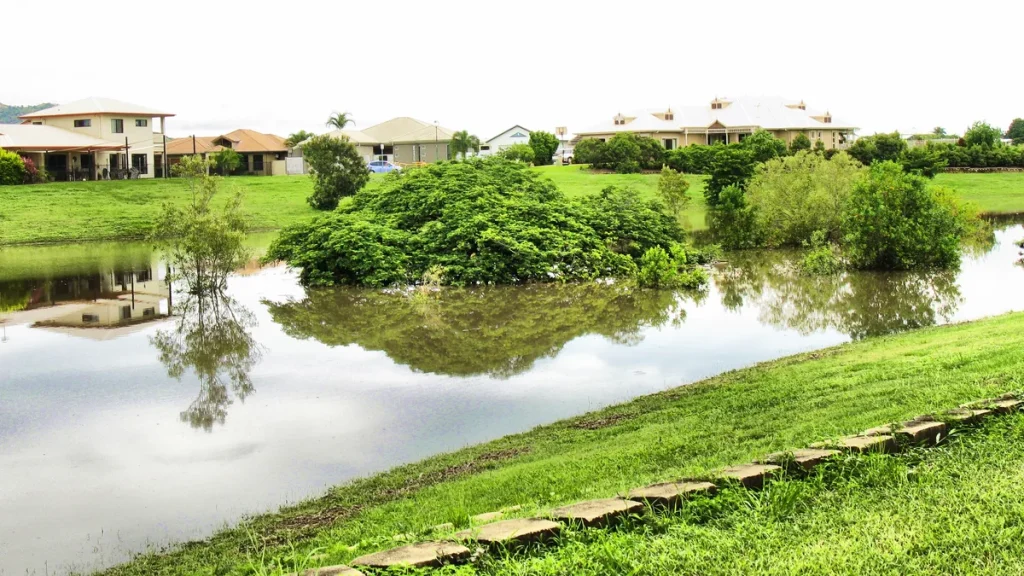
Rare infections draw public health warnings in Australia too. In September, Queensland’s Chief Health Officer warned of melioidosis risk during the flood clean-up after ex-Tropical Cyclone Narelle in the state’s far north.
The Contacts Being Traced
The figures for the contact tracing have come from different outlets at different times. Mr Duale said 28 contacts had first been identified, and that passengers and crew from the man’s flight were being traced, the Guardian reported. The BBC later reported that ten contacts had been quarantined and that 57 more were being traced. The two sets of figures were reported separately, at different stages of the response.
The World Health Organization’s representative in Kenya, Dr Neema Rusibamayila Kimambo, described the case as imported and the response as under way. “This is an outbreak of an imported case, one who came in and went straight to hospital, but the Government is working to identify all the relevant contacts as part of their response to this outbreak,” she told UN News.
Sources: The Guardian, “Kenya confirms first Ebola case as virus ‘surges’ in DR Congo province”, 6 October 2026 (https://www.theguardian.com/world/2026/oct/06/kenya-first-ebola-case-death-drc); BBC News, “Kenya’s first Ebola case: Ten people quarantined as screening concerns grow”, 7 October 2026 (https://www.bbc.com/news/articles/c6eq3x3v11d5o); UN News, “Kenya races to trace all contacts after first Ebola death, WHO official says”, 7 October 2026 (https://news.un.org/en/story/2026/10/1168542)
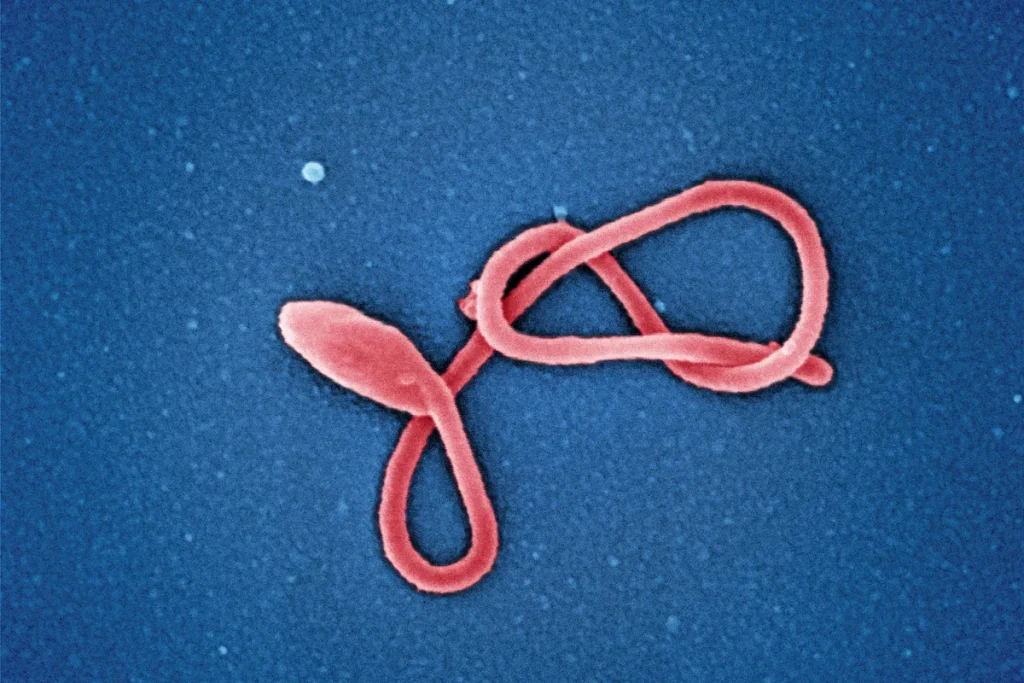
Image: NIAID, CC BY 2.0, courtesy of Wikimedia Commons.
A colourised scanning electron micrograph of a single Ebola virus particle, made at a US National Institute of Allergy and Infectious Diseases laboratory. Laboratory imagery unrelated to the patient in Kenya.