Queensland’s Chief Health Officer has warned residents in the far north to protect themselves from melioidosis as the clean-up from ex-Tropical Cyclone Narelle gets under way.
The warning applies to anyone likely to come into contact with floodwater or mud during the recovery, and it sets out the precautions the Chief Health Officer wants residents and clean-up crews to take in the days ahead.
Melioidosis is recorded in northern Queensland each wet season, and the risk to people rises when heavy rain and flooding carry the bacteria into the mud and standing water that the clean-up work disturbs.
news.com.au reported the warning on 17 September 2026, as residents and crews began clearing mud from homes, yards and public spaces across the flooded parts of the region.
The advice has been issued for the clean-up itself, when direct contact with mud and floodwater is more common than in ordinary weeks.
What Melioidosis Is
Melioidosis is caused by bacteria that live in soil and water in northern Australia. People are infected when the bacteria enter through cuts and other breaks in the skin, when they are breathed in, or through contact with contaminated water.
The bacteria survive in the ground through the dry months and are lifted into mud, puddles and floodwater when heavy rain arrives. The clean-up after a cyclone puts people directly into contact with both mud and water, and that is the risk the current warning addresses.
There is no vaccine for melioidosis, and the infection can be serious. Deaths from the disease have been recorded in Queensland in each of the past two seasons.
The Worst Season on Record
The warning comes after Queensland’s worst melioidosis season on record, and it is set against case numbers that have stayed high through the current year.
Cases in 2025 were clustered in Cairns and Townsville, and that season produced more deaths than any year before it.
The totals published for the two seasons do not agree, and the differences are wide. A Queensland Health surveillance snapshot puts the 2026 season at 73 cases and seven deaths, while news.com.au reported on 17 September 2026 that the year had produced 57 cases and three deaths, and put the 2025 death toll at 36. Queensland Health’s surveillance record gives 37 deaths for 2025.
Those sets of figures cannot all be right. Counts differ by source and by the date each was compiled, and case numbers are revised as results are confirmed, so totals drawn from different points in a season will not match. Queensland Health’s running surveillance report is the record to follow while the published totals disagree.
For people working in the clean-up, the precautions do not change with the totals, and the two counts for the year both include deaths from the disease.
Who Is Most at Risk
The Chief Health Officer’s advice names several groups as most at risk of melioidosis: people aged over 50, people with diabetes and other chronic diseases, and people who drink heavily.
Queensland Health’s case data also shows First Nations residents are over-represented among people diagnosed with the disease.
The risk is not limited to those groups, but the advice directs people in them to take particular care during the clean-up, and to stay out of mud and floodwater where that is possible.
People who cannot avoid working in mud and water, including those clearing their own properties, are also covered by the advice.
Working Safely in Flood Mud
The advice for the clean-up is specific. Cuts and wounds should be covered with waterproof dressings before any work starts, because the bacteria enter through broken skin, and they should stay covered while the work continues.
People working in mud or standing water should wear protective clothing, and they should wash their hands and skin thoroughly once the work is finished.
Anyone who becomes unwell during or after the clean-up should seek medical advice early, and should tell the doctor about any contact with floodwater or mud.
People in the higher-risk groups should be especially careful where mud and floodwater cannot be avoided, and the guidance applies across the region for as long as the clean-up continues.
The warning applies across the far north, and the Chief Health Officer has asked residents and crews to keep to the advice for the whole of the clean-up.
Related: Ten Injured as Severe Turbulence Hits Cathay Pacific Flight from Brisbane
Sources: Queensland Health, https://www.health.qld.gov.au/clinical-practice/guidelines-procedures/diseases-infection/surveillance/reports/melioidosis-surveillance; news.com.au, https://www.news.com.au/lifestyle/health/health-problems/deadly-disease-warning-in-wake-of-tropical-cyclone-narelle/news-story/29ff248e27181b66d028a4d7e461107b; 7NEWS, https://7news.com.au/stories/melioidosis-outbreak-in-australia/
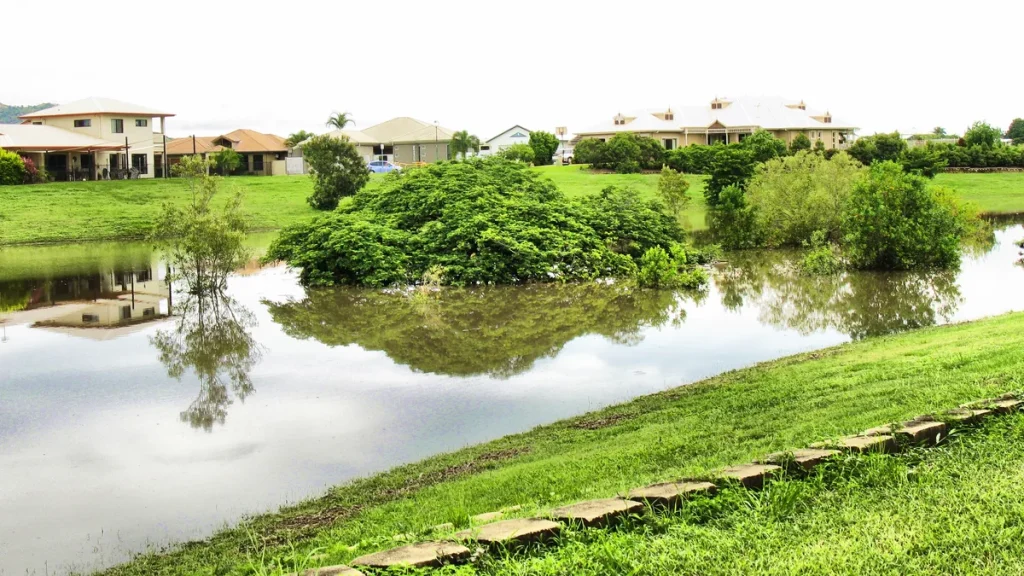
Photo: Rob and Stephanie Levy, CC BY 2.0, via Wikimedia Commons.
Illustrative – floodwater in Townsville during the 2010-11 Queensland floods. This photograph is not from the event described in the article.