
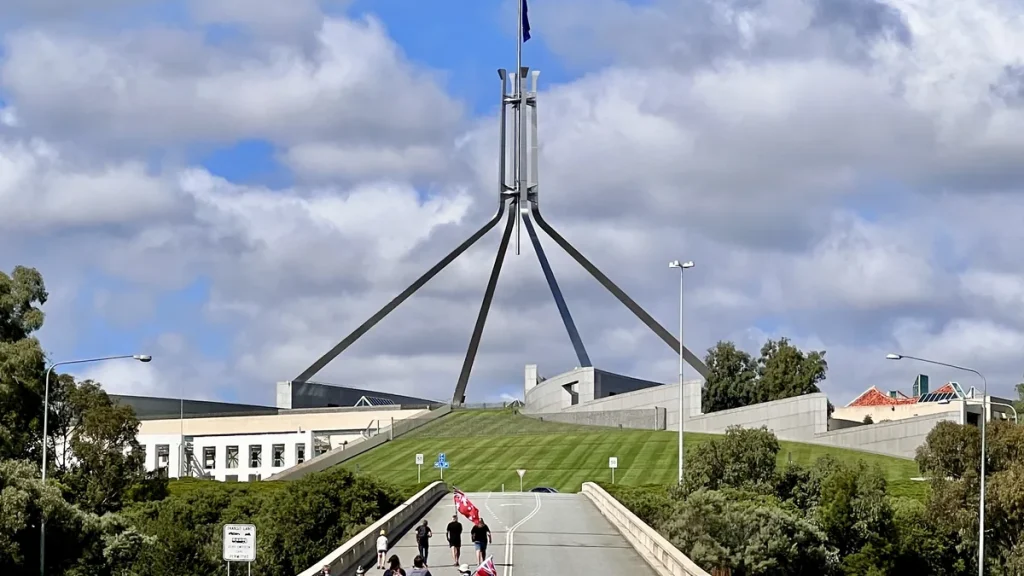
Parliament has passed the news bargaining bill, requiring Meta, Google, TikTok and LinkedIn to sign deals with Australian news publishers or pay a levy on the advertising revenue they collect in Australia.
The bill passed on 20 August, and royal assent, the step that turns a bill into an act, followed on 26 August. The new law creates a route to payment from the largest platforms to Australian news publishers, and it applies to the companies that meet the conditions set out in the bill.
The platforms affected are Meta, Google, TikTok and LinkedIn. Each faces the same choice under the law: reach agreements with Australian publishers, or pay the levy on its Australian advertising revenue.
Publishers have sought payment when their journalism appears on platforms, and the bill creates two routes by which that payment can happen: commercial deals with the platforms, or the levy on the companies that do not sign.
A bargaining framework is a negotiation over payment for news, in which a platform and a publisher settle what the platform pays for the journalism its services distribute. The bill sets the terms for those negotiations, and the levy is the charge that follows when the talks produce no deal.
The Levy and Who Pays It
The rate written into the bill is 2.5 per cent of Australian digital advertising revenue. A last-minute amendment put the figure at 2.75 per cent, and both figures have been cited in reporting on the passage.
The levy does not apply to every platform. A company comes within it only if it passes a revenue threshold and a market-power test, the two conditions the bill sets for coverage.
A platform that fails either condition sits outside the scheme, so the levy applies only to the companies that clear both.
A levy is a charge set by government and applied to the businesses it covers. This one is calculated on advertising revenue, so it is assessed on what a platform earns from advertising in the Australian market rather than on its global income.
The charge follows the revenue, so a platform with a larger Australian advertising business faces a larger charge, and the rate in the bill is what turns that revenue into the amount owed.
How a Platform Avoids the Levy
The agreements a platform signs with Australian news publishers count against the levy. The value of each deal is offset against the amount the platform would otherwise be charged, so a larger set of deals reduces what it owes.
Where the offsets apply, the value of the deals meets part or all of the levy, which moves the money into agreements between platforms and publishers. Where there is no agreement, the levy applies instead.
The offsets are what make the law a bargaining framework: a platform settles its obligation by dealing with publishers, and the charge applies only where the dealings fall short.
For the platforms, the decision comes down to money: the levy on one side, the cost of the agreements on the other, and the offsets as the link between them.
The money reaches publishers either way: through a levy the government collects and distributes, or through deals the platforms negotiate directly.
Where the Money Goes
Levy revenue is allocated to news publishers by the number of journalists they employ, so the size of a publisher’s newsroom determines its share of the fund.
Regional publishers receive a loading on top of the allocation, and a grants program funded from the same revenue sits alongside it.
The formula is the same for every publisher that qualifies: journalist numbers set the starting share, and the regional loading adjusts it.
The allocation, the regional loading and the grants program are the channels through which the money reaches the news industry.
The American Response
The United States has threatened to retaliate with tariffs in response to the law, according to SBS.
The government has continued with the bill through the objection, and the vote on 20 August carried it. The new act and the trade question now run in parallel, and the law stands while the tariff threat remains.
Free TV, the body representing commercial broadcasters, welcomed the passage in a statement on the day, describing the law as a win for Australian journalism.
Publishers now have two sources of payment under the law: deals with the platforms, or the levy. The platforms hold the choice between them, and the agreements that follow will show which one the money takes.
Related: TikTok’s EU Tangle: Transparency Troubles and Potential Fines
Sources: SBS, https://www.sbs.com.au/news/article/australias-media-bargaining-laws-pressure-tech-platforms-pay-for-news/3xxbppzrs; OpenAustralia Hansard, https://www.openaustralia.org.au/debates/?id=2026-08-20.85.1; Free TV, https://www.freetv.com.au/wp-content/uploads/2026/08/260820-Media-Release-News-Bargaining-Incentive-passage-win-for-Australian-journalism.pdf
Photo: Kgbo, CC BY-SA 4.0, via Wikimedia Commons.