Prime Minister Anthony Albanese has put a national rulebook for AI data centres to the states and territories, with conditions that would keep new facilities away from homes, schools and prime agricultural land.
Mr Albanese described the framework as the first of its kind in the world, a claim he intends to take to the United Nations within days. Queensland has already declined to sign, leaving the government short of the uniform national approach it is seeking.
The proposal arrives as a wave of new data centre construction reaches the planning system, driven by demand for AI computing. The conditions would apply to new projects, and they would apply in every state that signs on.
The Rules on the Table
The conditions would bar data centres from sites next to homes, schools and prime agricultural land. Operators would have to add more renewable energy to the grid than their facilities consume. Water use would have to be minimised.
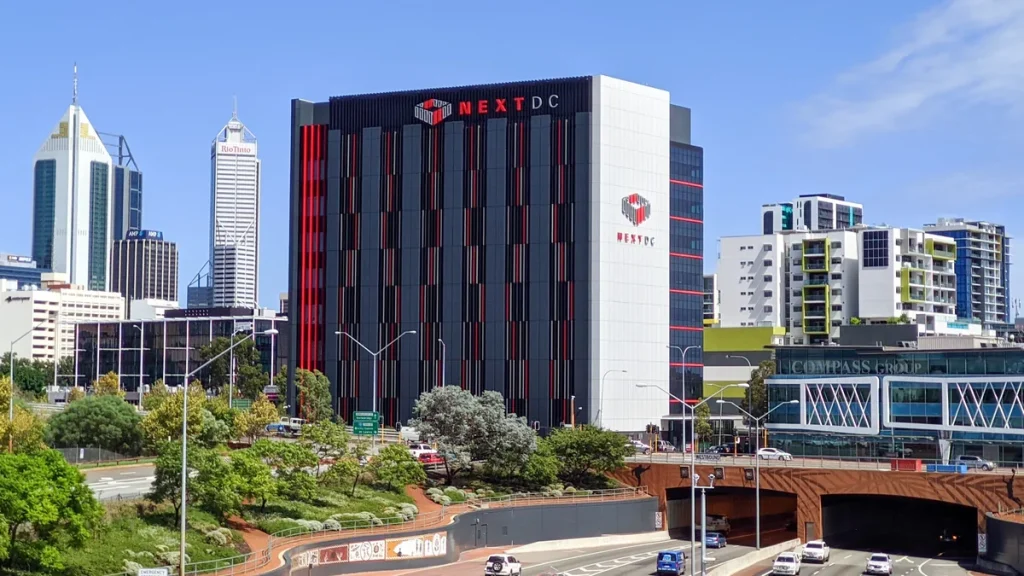
The conditions cover siting, power and water. A data centre is a building full of servers that run computing workloads, and AI has pushed up both the size and the number of facilities, because training and running large models takes far more computing power than earlier workloads.
The first condition addresses land. Prime agricultural land is farmland classified as the best of its kind for farming, and state planning systems treat it as a resource to be protected. The second and third conditions address what a large site consumes once it is built: electricity for the servers and water for the cooling systems.
Cooling is the reason water is on the list. Servers produce heat continuously, and some cooling systems draw on local water supplies to manage it. A facility that needs less water to stay cool would find the third condition easier to meet.
The renewable condition is a net measure. An operator would need to bring more renewable generation into the system than the centre draws out, which links each project to the energy build that feeds it. Under that rule, growth in the sector would depend on new generation and transmission coming online.
Each condition maps to a resource the states already manage. Planning systems allocate land, the electricity grid is planned at the national level, and water is allocated under state rules. The framework would attach the conditions to the sector as a whole rather than to one project at a time.
A Central Office
Administration would sit with a single office inside the Department of the Prime Minister and Cabinet. Housing it there concentrates the rules in the department closest to the Prime Minister, rather than spreading them across separate portfolios.
The world first description is the Prime Minister’s claim rather than a settled fact. The framework remains a proposal until the states agree to it.
Queensland Digs In
Queensland has refused to sign. Mr Albanese’s answer, reported by the Brisbane Times, was to tell the state to get with the program on the AI revolution.
Without Queensland, the rules would not apply across the whole country. A national framework depends on the states’ cooperation to take effect.
The refusal leaves the framework short of the national coverage the government wants. A rulebook that covers part of the country is a different proposition from one that applies everywhere.
Why the Numbers Are Getting Attention
The Australian Energy Market Operator projects that electricity demand from data centres will rise from about 5 terawatt hours in 2025-26 to 34 terawatt hours by 2035-36, in its 2026 Electricity Statement of Opportunities. AEMO is the body that operates and plans for the national electricity market.
A terawatt hour is a measure of electricity at the scale of the grid. Households buy power by the kilowatt hour, and a terawatt hour is that unit one billion times over. The 5 terawatt hour figure is the sector’s demand in 2025-26, and 34 terawatt hours is where AEMO projects it will reach by 2035-36. The forecast builds in project attrition, so it assumes that some of the centres now announced are never built.
Reporting on the framework counts 225 data centres in development nationally. That pipeline is the growth the framework would govern.
What Happens Next
The states and territories will now decide whether to sign. The Prime Minister will take the case to the United Nations in the coming days, where he will make it again. The appearance will place the plan before an international audience days after it was put to the states.
The other states’ answers will determine how much of the sector the framework covers. Queensland’s refusal has already set a limit.
For the sector, that leaves a decade in which electricity demand is projected to climb sharply and a rulebook that is still being negotiated.
Related: Global Web Disruptions as Cloudflare Outage Exposes Fragility of Internet Infrastructure
Sources: SmartCompany, https://www.smartcompany.com.au/technology/albanese-wants-data-centres-banned-near-homes-farms/; Brisbane Times, https://www.brisbanetimes.com.au/politics/federal/albanese-tells-queensland-to-get-with-the-program-on-ai-revolution-20260825-p60rhp.html; The New Daily, https://www.thenewdaily.com.au/life/tech/2026/08/25/data-centre-renewable-energy-qld; AEMO, https://www.aemo.com.au/newsroom/media-release/2026-ESOO
Photo: Samuel Wiki, CC0 1.0, via Wikimedia Commons.