Tensions across the Middle East continue to escalate as the United States and Israel remain engaged in an intensifying conflict with Iran, raising concerns of a broader regional crisis. Fresh warnings from Tehran, combined with diplomatic manoeuvres and reports of potential military escalation, suggest the situation is entering a critical phase.
Iran’s military has issued a stark warning that locations housing American personnel, including civilian hotels, could now be treated as legitimate targets. The statement marks a significant shift in the scope of the conflict, widening potential risk zones beyond traditional military installations.
According to Brigadier General Abolfazl Shekarchi, spokesperson for Iran’s armed forces, any site accommodating US troops effectively becomes a military objective. Speaking on Iranian state television, he stated that once American forces occupy a civilian facility, it is viewed as an extension of US presence. He further warned that Americans in public areas such as parks and tourist locations would no longer be considered safe.
This development introduces new concerns for civilian safety across the region, particularly in countries hosting US military personnel. Analysts suggest that such rhetoric reflects Iran’s attempt to deter US deployment while increasing psychological pressure.
At the same time, diplomatic channels appear to remain partially open. Germany’s Foreign Minister Johann Wadephul indicated that direct talks between Washington and Tehran are expected to take place soon, possibly in Pakistan. While details remain limited and no official confirmation has been provided by either the US or Iran, the mention of upcoming talks signals that backchannel diplomacy is still active despite escalating hostilities.
However, public statements from Washington present a mixed picture. US President Donald Trump has continued to speak about the possibility of negotiations, yet reports suggest that military planners are also preparing for a potential ground operation. Such an operation would represent a major escalation beyond air strikes and limited engagements, potentially involving significant troop deployment.
US Secretary of State Marco Rubio reinforced the administration’s timeline, stating that American objectives in Iran could be achieved within two weeks. His remarks suggested confidence in the current strategy, regardless of whether ground forces are ultimately deployed. Defence analysts note that this timeline may reflect operational goals tied to weakening Iran’s military infrastructure rather than achieving broader political outcomes.
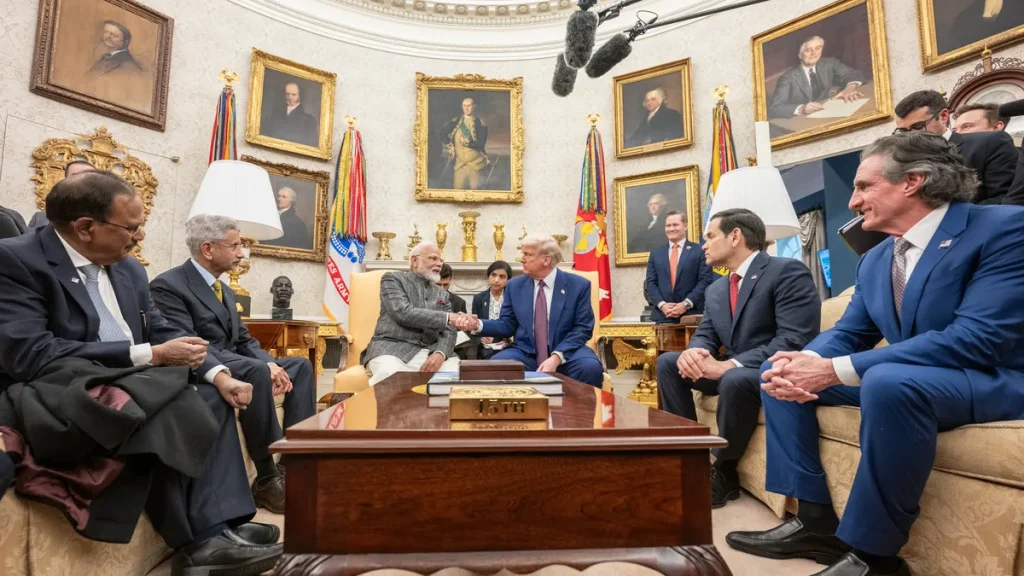
Adding an unexpected dimension to the situation, reports have emerged that technology entrepreneur Elon Musk participated in a private phone call between President Trump and Indian Prime Minister Narendra Modi. According to US officials cited by The New York Times, the call took place earlier in the week.
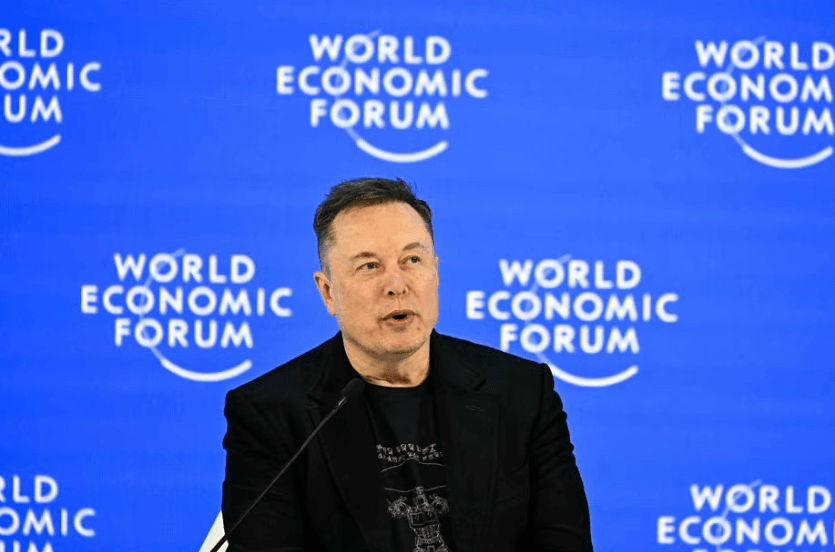
The involvement of a private citizen in a high-level wartime discussion has drawn attention and raised questions about the nature of Musk’s role. While no official explanation has been provided, observers point to Musk’s influence in global communications technology and satellite infrastructure as a possible reason for his inclusion.
India’s position in the unfolding crisis is particularly significant. As a major regional power with strong diplomatic ties to both the United States and Iran, New Delhi’s stance could influence broader geopolitical dynamics. Prime Minister Modi’s participation in discussions suggests India may play a role in de-escalation efforts or regional coordination.
Meanwhile, reports of wounded US soldiers have begun to surface, although details remain limited. Military sources have not released comprehensive figures, but early indications suggest that casualties have occurred during recent operations. The lack of transparency is typical in the early stages of conflict, as governments often delay releasing full casualty figures for strategic and operational reasons.
The broader implications of the conflict are becoming increasingly apparent. Oil markets have shown volatility amid fears of supply disruptions, particularly given Iran’s strategic position near the Strait of Hormuz, a critical global shipping route. Economic analysts warn that prolonged instability could have far-reaching consequences for global energy prices and supply chains.
Security experts also highlight the risk of the conflict spreading beyond its current scope. Iran maintains alliances with various non-state actors and regional groups, raising the possibility of proxy engagements in countries such as Iraq, Syria, and Lebanon. Any expansion of hostilities could draw additional nations into the conflict, complicating efforts to contain it.
Despite the rising tensions, diplomatic efforts have not entirely ceased. European nations continue to advocate for dialogue, while regional powers are reportedly exploring mediation options. The potential talks in Pakistan, if confirmed, may provide an opportunity to reduce immediate hostilities, though expectations remain cautious.
Below is a summary of key developments and indicators related to the ongoing situation:
| Category | Latest Update | Implication |
|---|---|---|
| Military Threats | Iran warns hotels housing US troops are targets | Increased risk to civilians and non-military infrastructure |
| Diplomatic Activity | Possible US-Iran talks in Pakistan | Indicates ongoing backchannel negotiations |
| US Strategy | Potential ground operation under consideration | Signals possible escalation beyond air campaigns |
| Timeline | US aims to achieve objectives within two weeks | Suggests short-term operational focus |
| High-Level Communication | Trump, Modi, and Musk reportedly held a call | Highlights unusual involvement of private sector influence |
| Casualty Reports | US soldiers reported wounded | Confirms active combat engagements |
| Regional Impact | Rising tension across Middle East | Risk of wider conflict involving multiple countries |
| Economic Effects | Oil market volatility | Potential global economic disruption |
As the situation continues to evolve, the coming days are likely to prove decisive. Whether through intensified military action or renewed diplomatic engagement, the direction taken by key players will shape not only the outcome of this conflict but also the broader stability of the region.
Related: US-Iran War Live: Israel Downs Strike from Lebanon as Hezbollah Signals Wider Retaliation
Sources: news.com.au, https://www.news.com.au/world/middle-east/usiran-war-live-updates-iran-says-hotels-housing-us-soldiers-in-region-will-be-targeted/live-coverage/3d899fc1ebdbc12d7a1a31097370a074
Photo: The White House, public domain, via Wikimedia Commons.
Illustrative – President Donald Trump and Prime Minister Narendra Modi in the Oval Office, 13 February 2025. This meeting is not the call described in the article.