India and Pakistan agreed a ceasefire on Saturday 10 May after four days of fighting, then accused each other of violations within hours of the announcement.
The Ceasefire
Donald Trump was the first to announce the agreement, in a post on Truth Social. He wrote that it came “After a long night of talks mediated by the United States”, and congratulated both countries “on using common sense and great intelligence”.
India’s foreign secretary, Vikram Misri, gave a different account of how it was reached. He said Pakistan’s director general of military operations called India’s at 15:35 IST, and both sides agreed to “stop all firing and military action on land, in the air and sea with effect from 17:00 local time today”.
Pakistan’s deputy prime minister and foreign minister, Ishaq Dar, confirmed a “full-fledged”, “not partial” ceasefire “with immediate effect”. Prime Minister Shehbaz Sharif said in a televised address, “For the benefit of everybody, we have made this agreement of ceasefire”.
The two countries’ military chiefs were due to speak again on Monday 12 May.
The Mediation Dispute
Who brokered the understanding is contested. Trump and his secretary of state, Marco Rubio, credit United States mediation. Rubio said he and Vice President JD Vance spent 48 hours speaking with senior officials on both sides, and that the agreement included talks “on a broad set of issues at a neutral site”.
Pakistani officials thanked Washington. Sharif said, “We thank President Trump for his leadership and proactive role for peace in the region”, while Dar told Geo News that three dozen countries were involved.
India’s government rejects third-party involvement. Its Ministry of Information said the agreement was worked out “directly between the two countries”, and that there was “no decision” on further talks. India’s account leaves no role for a mediator.
Aparna Pande of the Hudson Institute said each side is following long-standing policy. She said: “India has never accepted mediation in any dispute, be it India-Pakistan or India-China, or any other… Pakistan, on the other hand, has always sought international mediation”.
Vance, two days before the announcement, told Fox News: “we’re not going to get involved in the middle of a war that’s fundamentally none of our business”.
The Violations
The strain showed within hours. Explosions were heard in Srinagar and Jammu after the announcement, and Misri accused Pakistan of “repeated violations of the understanding”. He said India’s forces had been told to “deal strongly” with them.
Pakistan’s foreign ministry said it “remains committed to a faithful implementation of the ceasefire” and accused India of breaches “in some areas”. It called for restraint.
The chief minister of Jammu and Kashmir, Omar Abdullah, posted: “What the hell just happened to the ceasefire? Explosions heard across Srinagar”.
By Sunday the truce appeared to hold. CNN reported no fresh missile strikes or drone flights, though India’s air force kept high operational readiness.
What Preceded It
The four days of fighting were the worst between the two countries in decades. They followed an attack on 22 April at Pahalgam in Indian-administered Kashmir, in which gunmen killed 26 people, 25 Indian citizens and one Nepali national. India blamed Pakistan, which denied involvement.
India launched strikes on Pakistan and Pakistan-administered Kashmir on 7 May under the name Operation Sindoor. Four days of missiles, drones and artillery followed, and fighting continued until the ceasefire took effect. Pakistan said Indian strikes killed 36 people in Pakistan and Pakistan-administered Kashmir; India’s army reported at least 21 civilian deaths from Pakistani shelling. The figures come from BBC reporting, and each is attributed to the side that gave it.
What Remains
The understanding covers firing, not the wider dispute. India’s suspension of the Indus Waters Treaty remains in place, as do the visa suspensions and trade bans.
Security analyst Sahar Khan told Al Jazeera the truce was “still a very delicate and fragile ceasefire” and said she expected “some back and forth”. The military talks on 12 May will show what the two sides can still agree on, and what remains unfixed.
Related: Drones Down Under Fire: India and Pakistan’s High-Tech Tiff Escalates
Sources: BBC News, https://www.bbc.co.uk/news/articles/cvg9d913v20o; Al Jazeera, https://www.aljazeera.com/news/2025/5/10/india-and-pakistan-agree-to-an-immediate-ceasefire-after-days-of-escalation; CNN, https://edition.cnn.com/2025/05/10/asia/india-pakistan-ceasefire-explainer-latam-intl; Hindustan Times, https://www.hindustantimes.com/india-news/india-pakistan-dgmo-meeting-dgmo-talks-ceasefire-military-border-drone-operation-sindoor-101747053370518.html
Photo: Dashrathgoyal85, CC BY-SA 4.0, via Wikimedia Commons.
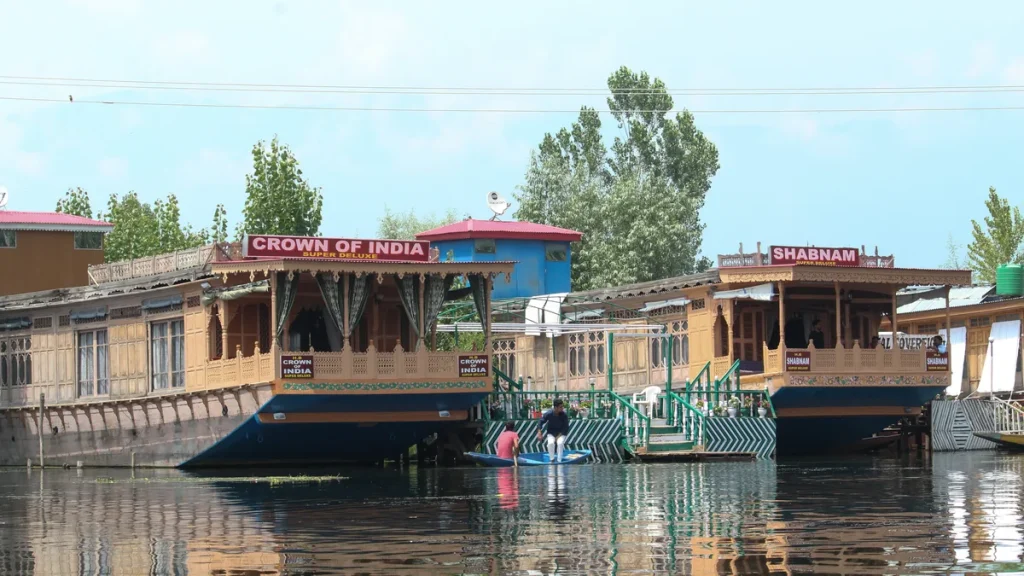
Illustrative: houseboats on Dal Lake in Srinagar, Indian-administered Kashmir, photographed in July 2018. The photograph is not from the events described in the article.