
From 6 November it will be illegal in England and Wales to possess or publish pornography that shows strangulation or suffocation, depicts sexual activity between people who are related, or shows adults role-playing as children under 16, BBC News reported. The UK government’s announcement of the start date was reported by BBC News and the Guardian on 16 October.
Non-fatal strangulation is already an offence when a person does not consent, but depicting it online is not currently illegal, the BBC reported. Amendments to the Crime and Policing Bill, which became law in April, were made to bring such content within the criminal law, with the offences taking effect on 6 November.
The BBC said the ban also covers pornography showing sex between step or foster relations where one person is pretending to be under 18.
Why the Law Is Changing
The rules follow a 2025 review of pornography regulation, led by Conservative peer Baroness Gabby Bertin and commissioned by former prime minister Rishi Sunak’s government, the BBC reported. The review found depictions of choking were “rife” on popular porn sites and had helped normalise the act among young people, and it warned that people imitating such behaviour “may face devastating consequences”.
The Guardian reported that the review found a “total absence of government scrutiny” of the pornography industry, and that the ban was announced after cross-party pressure prompted ministers to announce new legislation earlier this year.
Baroness Bertin said the news came “not a moment too soon”, BBC News reported.
Justice minister Alex Davies-Jones said, according to the Guardian: “This isn’t about criminalising harmless sexual preferences. But porn can shape what people think a healthy relationship looks like, especially young people.” She also said content which “normalises, or even glorifies” violence against women can “blur the line with what is acceptable in real life”, BBC News reported.
Questions Over Enforcement
Durham University law professor Clare McGlynn welcomed the laws but said questions remained over how quickly platforms and regulators would act, the BBC reported. “This is a potential turning point, the commencement of these laws marking a line in the sand when we decided that we were no longer going to accept the normalisation of sexually violent content in pornography,” Prof McGlynn told the BBC.
“While these are criminal offences, this is not about prosecuting individuals, but transforming the online pornographic landscape and that requires the platforms and regulator to act,” she said.
The End Violence Against Women Coalition welcomed the ban, the Guardian reported. “The government must now ensure the ban is effectively enforced, and update the Online Safety Act so that online platforms are required to remove this content,” said Janaya Walker, the coalition’s interim director.
What Changes on 6 November
The new offences carry a maximum of five years’ imprisonment for publication, according to the BBC. Possessing images of a person pretending to be under 16 carries up to three years, and possessing images of strangulation, suffocation or sex between certain relatives carries up to two years.
The government says publication can include uploading, posting or otherwise making content available online, and that possession can include keeping an image on a phone, a computer or in cloud storage, the BBC reported.
“If you’ve got this material, delete it. If you’re sharing it, stop,” Ms Davies-Jones said, according to BBC News. “It’s not as harmless as you may think, and after 6 November, it is criminal.”
More online safety coverage is in our Technology section.
Sources: BBC News, “Porn showing choking or incest to be banned from early November, government says”, 16 October 2026 (https://www.bbc.co.uk/news/articles/cmpqgepejr2ro); The Guardian, “Pornography with strangulation and incest to be banned in England and Wales next month”, 16 October 2026 (https://www.theguardian.com/society/2026/oct/16/pornography-strangulation-incest-ban-uk-november)
Photo: Julian Herzog, CC BY 4.0, via Wikimedia Commons.
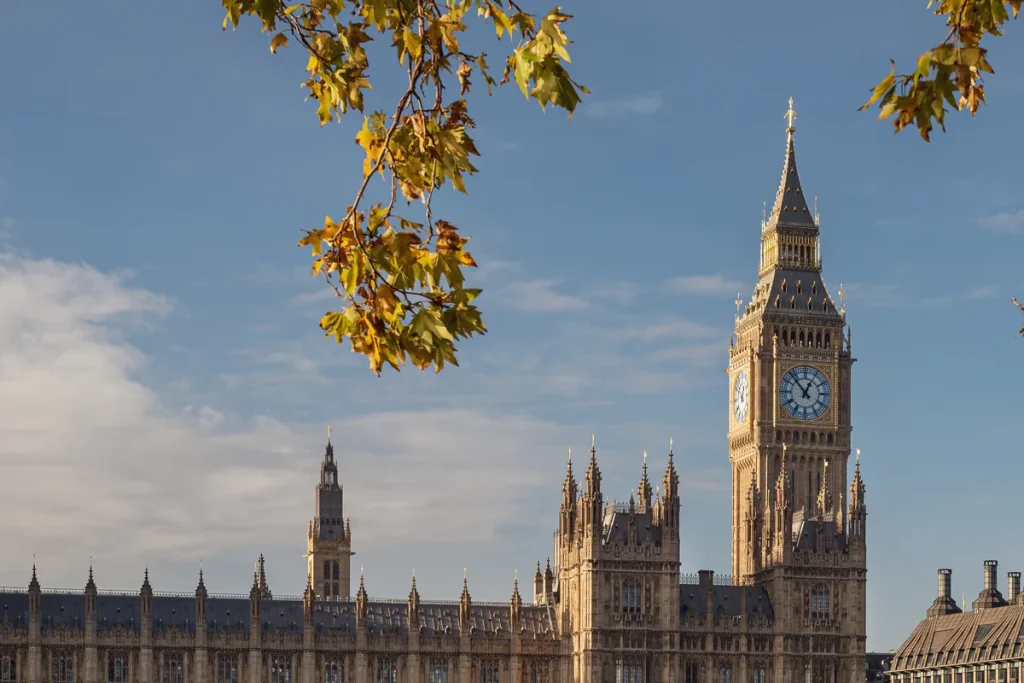
The Palace of Westminster and Elizabeth Tower in London, seen across the Thames in November 2023.