Home Affairs Minister Tony Burke has lifted the planned cap on third-year working holiday visas from 5,000 to 25,000. In the same announcement on Tuesday 17 November, he lengthened the regional work needed for a second visa.
Burke’s media release of 17 November sets 45,000 second-visa places and 25,000 third-visa places for 2026-27. From 1 March 2027, the specified work needed for a second visa rises from three months to four, where the requirement applies.
Burke told reporters that meant 120 days of regional work instead of 88, the Guardian reported. SBS gave the same change as a move from 88 to 120. Work done before 1 March 2027 still counts, and the requirement for a third visa stays at six months.
Burke told reporters, according to the ABC: “This creates a very significant shift, but also means for the people who are wanting to qualify for their second year, we’re getting more regional days out of them.”
In his release, Burke said: “Working Holiday Makers make an important contribution to our economy, especially in agriculture, tourism and hospitality and in regional Australia.”
He went on: “But when demand grows too fast, the government needs the tools to manage the program properly. The registration process is a fair way to do that.”
A Retreat From the September Plan
In his National Press Club address on 17 September, Burke had proposed a cap of 5,000 on third-year visas, down from about 31,000, the ABC and the Guardian reported. A ballot was due to start in November and has now been delayed.
Burke rejected suggestions that the government was abandoning its reforms, the ABC reported. He said the package came out of consultation with industry.
Labor MP Matt Smith said he had led a delegation of Far North Queensland industry leaders to Canberra to help “guide the shape of those reforms”, SBS reported.
Burke said slower processing of UK visas had given him room to lift the cap without changing the net overseas migration target, the Guardian reported. That target is 245,000 for 2026-27, falling to 225,000 in 2027-28.
He told reporters: “There was some slower processing generally happening before the announcement I made, and we have continued the slower processing with UK only since then. That’s provided the space that allowed me to go to the 5,000 to 25,000.”
The ABC reported on 17 November that a record 323,077 backpacker visas were granted in the last financial year. British backpackers rose from 47,238 in 2023-24 to 79,412 in 2024-25, according to the ABC.
How the Announcement Landed
Burke spoke to reporters in Cairns, while Opposition Leader Angus Taylor spoke to reporters in Townsville, SBS reported.
Taylor said, according to the Guardian: “We want to see more of it in regional areas. That’s critically important. But they’ve created a complete mess with this raffle.” “They should just axe it,” he told reporters in Townsville, SBS reported.
“We need more details on the logistical realities of this reform before we can fully throw our support behind it,” National Farmers’ Federation president Hamish McIntyre said, according to the ABC.
“These are sensible and welcome changes that recognise the important contribution working holidaymakers make,” Accommodation Australia chief executive James Goodwin said, the Guardian reported.
UK citizens remain exempt from the regional work rules under the Australia-UK free trade agreement. Burke said talks with the UK were going well but gave no timeline, the ABC and the Guardian reported.
The Dates in the Minister’s Release
The registration portal opens on 1 December 2026. From 1 March 2027, anyone seeking a second or third visa, except UK citizens, will need a Next Year Regional Work Guarantee, which is obtained by registering interest and being invited.
The first monthly invitation round is expected in mid-January 2027. Registrations are valid until 30 June 2027, and an invitation is valid for 12 months.
Current Working Holiday Makers have until 28 February 2027 to complete their specified work and apply under the existing process.
In the release, Burke added: “Australia will continue to welcome Working Holiday Makers. These reforms make the program fairer, more targeted and sustainable for the long term.”
Our Immigration section has more on visa policy, including Albanese’s defence of the student visa crackdown in September.
Sources: Tony Burke MP, “A fairer and more sustainable Working Holiday Maker program”, media release, 17 November 2026 (https://www.tonyburke.com.au/media-releases/2026/a-fairer-and-more-sustainable-working-holiday-maker-program); ABC News, “Government backflips on backpacker regional work policy”, 17 November 2026 (https://www.abc.net.au/news/2026-11-17/backflip-backpacker-working-holiday-visa-regional-work/107393474); The Guardian, “Labor policy backflip will allow more backpackers to work in regional Australia”, 17 November 2026 (https://www.theguardian.com/australia-news/2026/nov/17/labor-backpacker-policy-backflip-work-regional-australia-holiday-visas); SBS News, “Tony Burke announces backpacker visa backdown after industry pressure”, 17 November 2026 (https://www.sbs.com.au/news/article/backpacker-visa-changes-tony-burke-industry-pressure/7bt1z7pij)
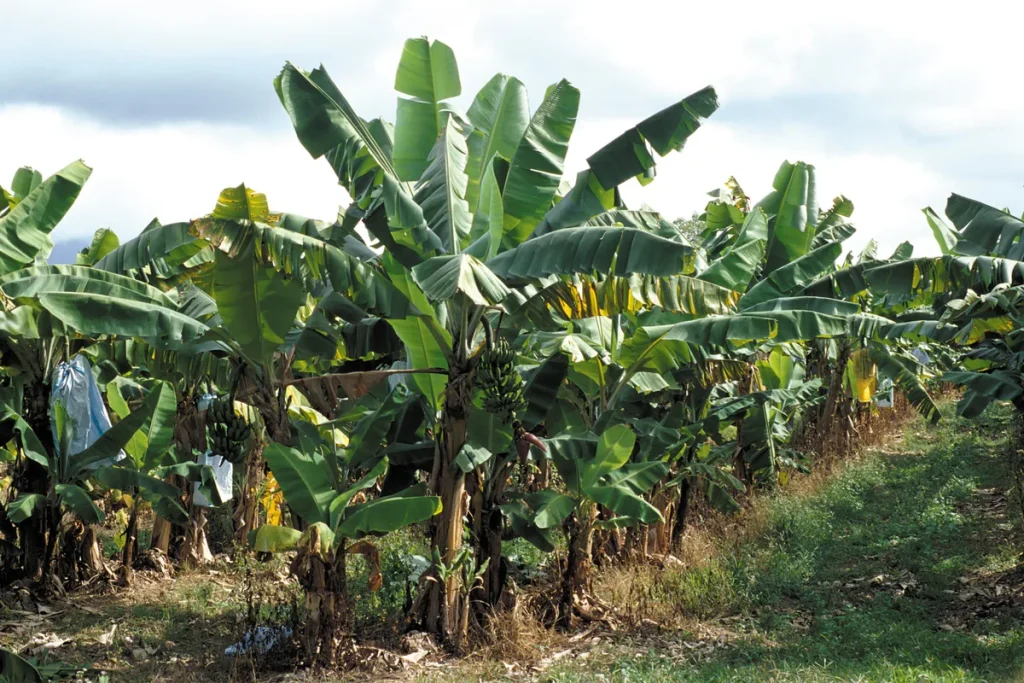
Photo: Willem van Aken, CSIRO, CC BY 3.0, via Wikimedia Commons.
Banana rows on a plantation just north of Cardwell in Far North Queensland, photographed for CSIRO. A file image of regional farm work, used for illustration.