The conflict between the United States and Iran intensified overnight as Israel intercepted a projectile launched from Lebanon, while Hezbollah pledged further action in support of Tehran. The latest developments come amid direct military exchanges between Washington and Tehran, raising concerns among diplomats that the confrontation could expand across the region.
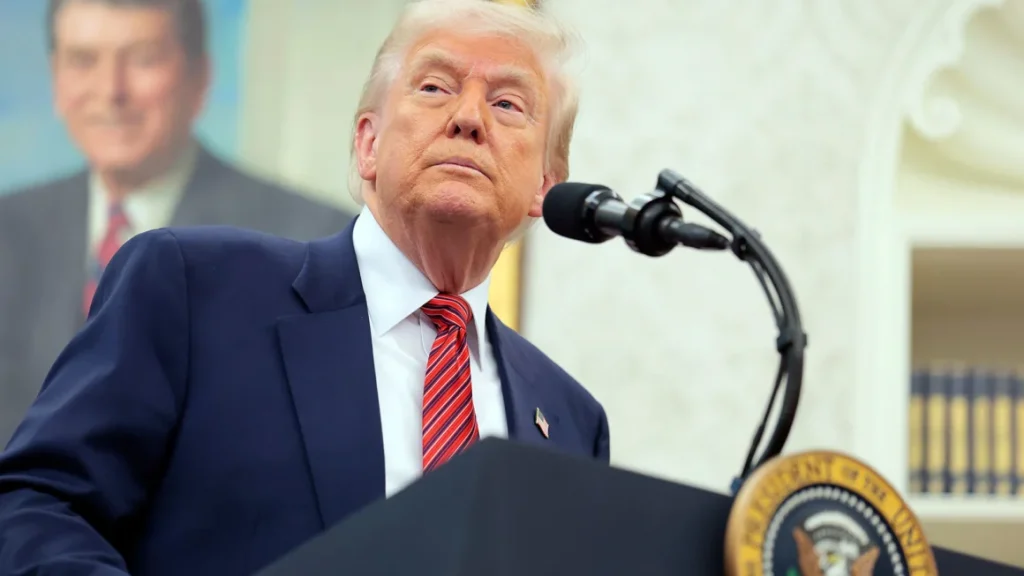
US President Donald Trump delivered a direct warning to Iranian forces, urging them to “lay down your arms and receive full immunity or face certain death”. In a recorded statement published on his Truth Social platform, he said the United States would respond forcefully to attacks on its personnel and interests.
Three American service members have been killed so far in the operation, according to the US Central Command, with five others reported to be seriously wounded. The Pentagon has not publicly released the identities of the casualties, but confirmed they were stationed at facilities targeted in retaliatory strikes linked to Iran-aligned groups.
President Trump acknowledged the human cost of the confrontation. “There will likely be more before it ends,” he said, adding that the United States would seek to prevent further loss of life. He pledged what he described as a decisive response against forces he accused of destabilising the region.
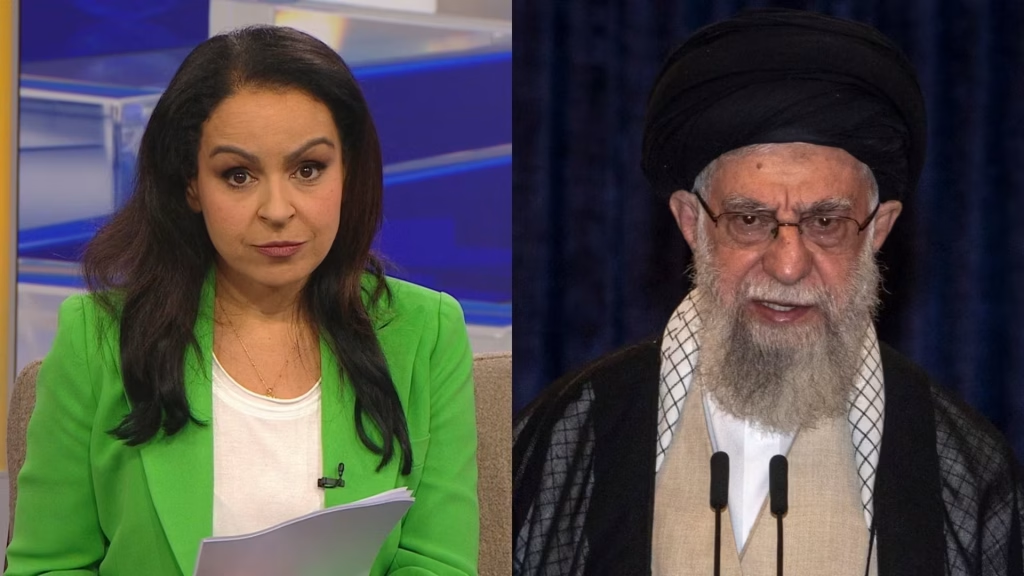
The remarks followed co-ordinated US-Israeli military strikes on targets inside Iran, including strategic military and command infrastructure. Iranian state media reported the death of Iran’s Supreme Leader, Ayatollah Ali Khamenei, in the strikes. Tehran has not provided detailed confirmation of the circumstances, but senior officials vowed retaliation.
Israel’s Prime Minister, Benjamin Netanyahu, said Israeli forces were “pounding the heart of Tehran with growing intensity”. He signalled that operations would continue in the coming days, indicating a sustained campaign rather than a limited strike.
The regional dimension of the conflict became more apparent when Hezbollah, the Iran-backed Lebanese militant organisation, launched projectiles across the border into northern Israel. The Israel Defense Forces confirmed that at least one incoming missile was intercepted by air defence systems. There were no immediate reports of casualties.
Hezbollah declared that it would stand in support of Iran and warned of further retaliation. The group has long been funded and armed by Tehran, according to Western intelligence assessments, and has previously engaged in cross-border exchanges with Israel. Analysts note that any sustained involvement by Hezbollah would significantly widen the conflict front.
The United States maintains a substantial military presence in the Middle East, with an estimated 30,000 to 40,000 troops stationed across bases in countries including Iraq, Syria, Bahrain and Qatar. According to the Congressional Research Service and the US Department of Defense, American forces in the region are tasked with counter-terrorism operations, maritime security and deterrence against state and non-state actors.
Professional defence analysts have warned that a direct confrontation between Washington and Tehran could disrupt global energy markets. Iran sits on approximately 9 per cent of the world’s proven oil reserves, according to BP’s Statistical Review of World Energy. The Strait of Hormuz, through which around 20 per cent of global oil supply passes daily, remains a strategic chokepoint.
Brent crude prices rose sharply in early trading following reports of expanded strikes, reflecting market sensitivity to any threat of disruption in the Gulf.
Below is a summary of the key confirmed developments so far:
| Category | Details | Source |
|---|---|---|
| US troop casualties | 3 killed, 5 seriously wounded | US Central Command |
| Iranian leadership | Ayatollah Ali Khamenei reported killed in coordinated strikes | Iranian state media |
| Israeli military action | Air strikes on Tehran; interception of Lebanon-launched projectile | Israel Defense Forces |
| Hezbollah response | Public vow of retaliation; missile launched into northern Israel | Hezbollah statement |
| US regional presence | Estimated 30,000–40,000 troops in Middle East | US Department of Defense |
The White House has stated that the United States will continue operations aimed at what it calls Iranian military infrastructure and affiliated groups. Iran’s Foreign Ministry condemned the strikes as an act of aggression and said it reserved the right to respond under international law.
International reaction has been swift. The United Nations Secretary-General called for immediate de-escalation and urged all parties to avoid actions that could trigger broader regional war. The European Union’s foreign policy chief said diplomatic channels must remain open.
According to the International Institute for Strategic Studies, Iran possesses one of the largest ballistic missile arsenals in the Middle East, estimated at several thousand short- and medium-range systems. Israel, meanwhile, operates advanced air defence systems including Iron Dome, David’s Sling and Arrow, designed to intercept incoming rockets and missiles.
Security experts caution that the conflict’s trajectory will depend heavily on whether regional proxies become directly engaged. Hezbollah’s military wing is believed to have an estimated 45,000 fighters and tens of thousands of rockets, according to the Center for Strategic and International Studies.
While both Washington and Tehran have exchanged threats in previous years, direct military coordination between the United States and Israel against senior Iranian leadership marks a significant escalation.
Financial markets, energy traders and diplomatic observers will be watching closely in the coming days. A prolonged confrontation could alter security arrangements across the Middle East and reshape alliances.